Yes, as in the one from the Bible

One of the craziest things about Israel is recognizing names and places from the bible ALL THE TIME. These were just a few. You can take the literal-ness of these sites with all of the grains of salt in the Dead Sea, to taste.

Who here knows the story of Lot’s wife? Well, this pillar of salt is said to be her.
Camels hanging out on Mount Sodom. You know, the one with the sodomites, fire and brimstone? Anyhow, there’s no town here any longer.
Nimrod’s Castle is formidable, even thousands of years later.
This one you may recognize from history. This is the hill of the ancient city of Gamla. There was still several thousand year old pottery strewn about the site.
This is where those famous walls of Jericho are said to have come a-tumblin’ down. If you have interest in this site, see our Welcome to Jericho post!
The Mount of Temptation, where Jesus is said to have gone into the desert and be tempted by the devil. For more information on this site, see our Welcome to Jericho post!
Remember that pesky, baby-slaughtering King Herod? This is a room in Masada, his fortress and pleasure palace.

Floating in the Dead Sea

The Dead Sea is simultaneously harsh, desolate, and devastatingly beautiful. It is the lowest elevation spot on Earth. Touching the water, it almost feels slick or oily from the dissolved salts, and that density makes for amazing floating. I hope you can enjoy it vicariously through this video of Josh’s first float.

Welcome to Jericho

We stuck out like a sore thumb. I, for one, was nervous. Our comfortable rental car was parked in a gas station parking lot many miles away and we had negotiated our way into the heart of Palestine by taxi using sign language, nods, smiles, cash, and the help of an occasional translator. We were aware we were getting ripped off and understood that this was the price of visiting a place without knowing any of the language or much of the culture, on our own. We hadn’t seen anyone who looked like us since we left westernized Israel.

Our first stop was the Mount of Temptation, where a very well-dressed man followed us around the site, lurking nearby. We debated: was he there to give us a hard time, or to make sure we were okay? Either way, we tried to stick ourselves in packs of middle eastern and Indian tourists, preferably near mothers and grandmothers. The site itself is interesting and said to be the location that the devil tempted Jesus in the desert. Given that it was 9am and already 100 degrees, I could imagine that spending any amount of time here was a bit of a trial. We snapped some photos and snuck away from the well-dressed man, unsure if we should be mentally thanking him or relieved to get away.

The harsh and desperate Mount of Temptation. Fortunately, we took the easy way up in the teleferique.
Still smiling!
Josh wanders around the monastery at the top of the Mount. The cool shadows were a welcome relief.

Back at the base of the mountain, we approached the ancient Tell es-Sultan. Tells are fascinating. They’re hills that are literally made out of the rubble of thousands of years of cities, built and collapsed and re-built over time. They are an archaeological goldmine and this particular one is one of the oldest known settlements in the world. It dates back to 10,000 BCE. Remember those Canaanites, Phoenicians, and Philistines from the bible? They lived here. Remember that story about Joshua fighting the battle of Jericho, marching in circles and playing trumpets and the walls came a-tumbling down? Whether or not the story happened exactly like that, these are those walls. It. is. magnificent.

Tell es-Sultan, a 12,000 year old settlement and the original site of biblical Jericho.
In a perhaps misguided decision, we took a hike around the tell.
Shade, finally. By the time Josh took this picture I was not doing great and no longer smiling.

It was also scorching hot. By this time, the thermometer was nearing 120 degrees Fahrenheit. I was a bit dizzy and very dehydrated; we had to keep moving. We panted our way to a roadside juice stand with fresh squeezed juice that we really hoped was sufficiently safely prepared and stored for our weak American stomachs. Happily, we met a Palestinian boy there who spoke decent English and scooped us out some. It was sweet, and fresh, and refreshing. We didn’t talk about anything particularly important but this chance meeting would have a lasting impact on us: anytime Josh or I hear about a Palestinian young man who was killed in the news, this boy flashes in our mind, and we hope it wasn’t him. I know this is morbid but this is one of the hazards of traveling, right? It puts a face on the conflict in far flung lands and makes every sad NPR article a bit more painfully real.

This boy was just one of the kind-hearted people we met while wandering around the city of Jericho. The atmosphere in the town of 18,000 was a mix of hope and desperation. Tourists haven’t been coming here much in recent times because they are afraid of unrest and conflict, cutting off the economic inflow. Possibly because of this, the Palestinians were extremely happy to see us and every person who we passed took time to say “Welcome to Jericho!”. The vast majority didn’t appear to speak a single other word in English, but they had all memorized that phrase and we heard it over and over throughout the day with smiles, waves, and gifts of crunchy dates pressed into our hands. Sometimes the desperation peeked through, like a man who started haggling a simple salad at 15 US dollars when we could get large sandwiches for a dollar or less 5 feet away. The poverty in many places was apparent. Still, there was an undercurrent of hope. There were election posters hung about, including the faces of some female candidates, and piles of construction materials on the street corners. Men placed bricks and stones happily, seemingly optimistic about the future of their town.

Construction on the streets of Jericho.
State of Palestine ministry of the interior building.
Election notice and some other things we couldn’t read.
An ordinary street in downtown Jericho.

Eventually, it started to get late, and we were hot and dusty and parched. We needed to arrange to meet our taxi driver and make our way back to Jerusalem. As we drove west, it was a bit like driving forward through time. From stone ruins and dirt roads, past whitewashed mosques, simple dwellings, a gas station and small settlements, right up to the modern skyscraper construction of Tel Aviv. I would go back in time to Palestine in a heartbeat.

The Holy Sepulcher/ Things I Didn’t Quite Understand

We walked out of the hot, bright Israeli sun and were immediately surrounded by darkness, cool stone corridors, clouds of incense and candle smoke, richly colored paintings, haunting music, and hordes of crying pilgrims. There is something about this place that makes it one of the more emotionally charged places I’ve ever been.

As I entered the tomb where Christians believe Jesus’ physical body was laid to rest, I even found myself wiping away some tears. As a long time atheist, this makes no sense. I cannot explain why an emotionally saturated atmosphere would have caused a semi-religious experience in an absolutely not religious person. But I think it’s okay that there are still some things in this world that I don’t understand.

Here are a few photos from in and around the Church, for those who are interested. I feel privileged to have gotten to visit this important place.

The hot, dusty exterior of the Church of the Holy Sepulcher. If you look closely at the top right window, you can see the immovable ladder. This has it’s own crazy story: According to tradition, it has been sitting in this spot since 1728 because someone accidentally left it there way back when and no object in this church can be moved without the agreement of 6 religious sects and, frankly, they can’t get it together. Google it if you don’t believe me. It’s a hoot.
Decorated dome.
The Stone of Anointing, where Jesus is said to have been anointed prior to the crucifixion.
This is the location where the cross is said to have been located at the time of the Crucifixion. In a very large coincidence, it is also the exact place of the burial of the skull of Adam. As In Adam and Eve.
A painting behind the stone of anointing. Notice the skull of Adam in the bottom of the photo.
A dome with a pinch of Rome.
Beautiful, immersive altars.

Financially speaking, how do we do it?

Many people think that international vacations need to cost thousands of dollars and are a treat you can only make happen a few times in a lifetime. They picture fancy drinks at all-inclusive resorts, tiki torches and tiny umbrellas in Tahiti, spas in the south of France, or the kinds of hotels that fold your towels into elephants and peacocks. Well, that’s certainly one way to travel. If we saved for a few years, we could probably make that happen, too. But because we want to travel abroad multiple times a year, to a wider variety of destinations around the globe, that plan won’t work for us. We do it another way.

Some background: We’re not trust funders. Neither one of us inherited wealth. We left school with heaps of debt during the recession and, like many in our generation, have had periods of financial struggle since then. We work full time, (sometimes way too many hours), but all you see is us jet setting to London for a long weekend. So… how do we do it?

It’s actually really simple.

We live and travel as inexpensively as possible in order to maximize our adventure budget.

Traveling inexpensively means…

Plan smarter, Fly smarter, sleep smarter, play smarter

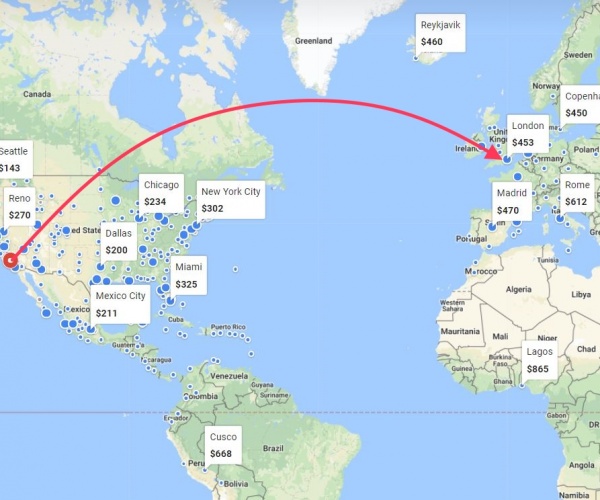
  1. We go wherever it is cheapest, especially to off-season and less-known destinations. We’re flexible with when we go and try to go to wherever the most inexpensive plane tickets are for a given trip. Our average international plane ticket cost $340 round trip in 2018.
  2. We primarily travel to destinations where cost of living is low and make sure that travel to more expensive countries is an infrequent minority.
  3. We fly on budget airlines and make sure we jump through all of their money-saving hoops. (Ex: check in online, pre-print or save your boarding pass, bring an empty water bottle and fill it in the airport terminal, bring your own meals instead of paying for a meal service, don’t pay to choose seats or for extra legroom, etc.)
  4. We pack only a personal item, avoiding checked luggage and carry on baggage fees.
  5. We sleep in single room Airbnbs, tents, in the back of the car, or with friends.
  6. We find ways to eat cheaply, including delicious street food, and are never disappointed.
  7. We bring a water bottle and a steripen so we can drink local tap water, instead of paying for bottled water. (This allows us a lot of flexibility, as well as security that we can find drinkable water anywhere we go.)
  8. We walk or take public transit (instead of taxis in most cases).
  9. We seek out attractions that are free.
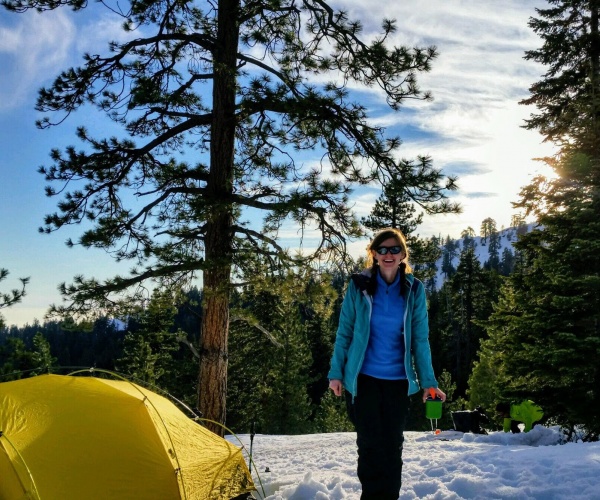
  10. For local travel, we converted our Honda Element to a Motelement and use that as our vacation home on weekends. We usually park it at trail heads, in Walmart parking lots, on free Bureau of Land Management land, in friends’ driveways, or anywhere else where we don’t have to pay a campground fee.

Living inexpensively means…

  1. We share 1 car. The Motelement doubles as my commute vehicle two days a week and Josh works from home.
  2. We do our own car maintenance and repairs in most cases.
  3. We rent a 1 small, bedroom apartment in a less expensive community.
  4. We don’t have kids (yet).
  5. We eat out and order in about once per month and cook the rest of our meals at home (excepting special occasions).
  6. We almost never go to movies, out for drinks, or to concerts, or whatever other people do for fun. (I’m not even sure what that is, really.)
  7. We don’t buy single-purpose household items unless they are absolutely necessary and we don’t purchase knick knacks.
  8. We buy simple clothing that will last a long time and mend it when needed (For us, Adventure>>>Fashion).
  9. We cut it down to the basics: I have 4 pairs of shoes for work or city-wear. I’ve found that anything past that is unnecessary. Josh has even fewer than that.
  10. We buy things in bulk to save per unit cost, such as paper towels, cleaning supplies, etc.
  11. We eat whatever produce is cheap and in season, buy meat only when we find a good price, and vacuum pack and freeze it.
  12. I make DIY backpacking food and Josh makes DIY just about everything else. Josh also repairs things when they break and patches them for us when they have gotten worn.
  13. We buy last-season and off-season adventure gear when it is on sale.
  14. We set an annual travel budget and earmark money specifically for our trips. It took me a full year to save for our Israel, Palestine, and Egypt trip. That trip alone cost us most of our 2016 travel budget. In 2018, we went to 10 countries with cheaper flights for shorter periods of time.

I think you get the idea. If you want to travel more, I would encourage you to look critically at this list, think of ways you spend and save money, and decide what you could live without.

So, which of these do you want more?

To go out for a drink this Friday, or to drink a mojito in Cuba?

To buy Starbucks tomorrow morning, or drink organic coffee on a farm in Panama in 6 months?

Pay for an expensive wedding, or go on a safari for honeymoon?

We support whatever choice you make. Good luck and happy traveling!

14 Days in China

Our 1 week trip in China turned into 2, due to Super Typhoon Mangkhut.

Trip time: 14 days: 10 PTO days + 5 weekend days – 14 hours each direction.

Major attractions visited:

  • Hong Kong
  • Tai O Fishing Village
  • Man Mo Temple
  • Shim Shui Po
  • Shenzhen
  • Longji Rice Terraces
  • Tian Tou Zhai Village
  • Yangshuo
  • Moon Hill
  • Fuli Town
  • Zhangjiajie National Park


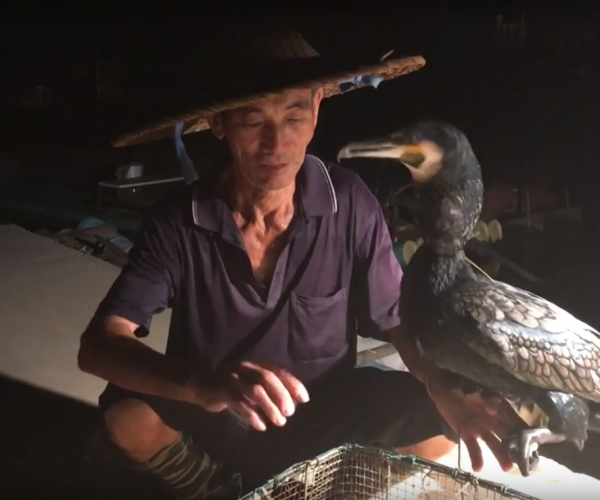
Cormorants are heavier and more intelligent-seeming than you would expect, with neck feathers that are as soft as high-end cupcake
Typhoon Mangkhut shut down the train between Yangshuo and the coast and cut off the path to our flight out
Musings on a cultural difference between China and the US.
Today was tough. Shenzhen is louder, more confusing, and more difficult to navigate than Hong Kong, and my feet hurt
It involves a lot of pointing and uncertainty.

Gone Fishin’ … with Cormorants

Cormorants are heavier and more intelligent-seeming than you would expect, with neck feathers that are as soft as high-end cupcake frosting. When they look at you, your first thought might be “bird, bird please don’t peck out my eyeballs.” But your second thought might be that you could see how humans formed a relationship with these magnificent creatures.

Fisherman in Yangshuo have had a long history of fishing with cormorants. They tie a snare around the bird’s necks and send them off in the water. Small fish will pass into the bird’s stomachs but larger fish get caught by the snare. As the birds return to the boat, the fisherman force the birds to regurgitate the larger fish into fishing baskets to collect their haul. It seems like it would hurt, with all the spikey fish spines, but the birds appear to take it in stride and keep returning to their master.

Cormorant fishing used to be a successful industry in China, Japan, and Korea, but now that way of life is dying and it is mostly a show that is done for tourists. In order to arrange ours, we were told to follow a woman who didn’t speak any English through a series of dark alleys, down to the river in the pitch dark of night, where we waited until the fisherman appeared. At the end of the show, we were able to hold the birds and view them up close. Animal rights concerns aside, it was an experience we feel lucky to have had.

I know the video is dark, but try to spot the cormorants diving for fish in the lighted water.

Outmaneuvering Typhoon Manghut & Travelling on the Fly

Journal entry from 9/8/18:

Typhoon Mangkhut shut down the train between Yangshuo and the coast and cut off the path to our flight out of HK. This forced us to rebook and extend our trip by 6 days.

The weather isn’t great, but we’re safe, and we’re going to make the best of this opportunity by traveling a bit further inland before heading home.

I’m happy to report that we’re really starting to figure out this bus-train-metro thing and it’s actually not so difficult once you get the hang of it. Here’s Josh, riding the bus to the Yangshuo metro station while booking two bullet trains to Guilin and Changsha. It’s great to be able to do these things on the fly and keep a flexible schedule so that we can adapt to the weather and travel conditions as we go.


Josh orders our connecting tickets on his phone. He became our travel ticket master during this trip.
Josh picks up the tickets he purchased by showing the reservation on his phone to the teller. It’s really not so complicated once you get used to the fact that you can’t speak the same language and you don’t try to rely on it.


On Vulnerability in China

On every bus and train stop, the announcements or signs remind you to “take care of the old and children”. I really like that.

Even the way that bus drivers drive very carefully when next to mopeds and scooters demonstrates how much this culture values human life and takes care of the vulnerable.

Sometimes, the vulnerable are silly white people who can’t read any signs and need help figuring out where to get hot water or queue for the bus and, in these situations, we’re taken care of, too.

I feel as safe here as I’ve felt anywhere.

(Photo: XingPing water wheel on the Li River, Guangxi Province.)

Gratitude: The antidote for tough travel days

Today was tough. Shenzhen is louder, more confusing, and more difficult to navigate than Hong Kong, and my feet hurt as badly as I can ever remember them hurting, ever.

But I believe in finding things to be grateful for, always. So, here goes:

1. I am grateful that we are in a place that is more different than anywhere I can ever remember being, and that we can enjoy this amazing privilege of traveling and visiting Asia for the first time.

2. I am grateful that this hotel room is the same price as the one in HK but 6-7 times larger, and the nicest place I’ve ever paid for with my own money.

3. I’m grateful for translation apps, which helped us pay for our room and identify food today, the steripen, which allows us to drink clean water, and the VPN, which is giving me free range access to the internet.

4. I am grateful for fried pork (OMG GOOD), Hawthorne fruit gummies, “bean skin”? (Like an omelette with rice, mushroom, meat and beans?), and real passion fruit juice. I am grateful that the food here is fantastic, and I’m grateful that so much of it is not fish.

5. I’m grateful for my adventure partner, who makes even the long, hard travel days a lot funner.

Eating in a country where you don’t speak the language

Eating in a country where you can’t read the menu or speak the language is fantastic. We’ve become comfortable with finding the best smelling thing, pointing at it, and saying “zhe ge” or “na ge” (this or that), and finishing the transaction with smiles, nodding, and gestures. Unfortunately, this means I can’t tell you what I’m eating.

This one is a glutinous dough, cooked on a griddle, maybe with cheese, onion, garlic, and chili, eaten on a stick.

We should really eat more things on sticks in the US.