14 Days in China

Our 1 week trip in China turned into 2, due to Super Typhoon Mangkhut.

Trip time: 14 days: 10 PTO days + 5 weekend days – 14 hours each direction.

Major attractions visited:

  • Hong Kong
  • Tai O Fishing Village
  • Man Mo Temple
  • Shim Shui Po
  • Shenzhen
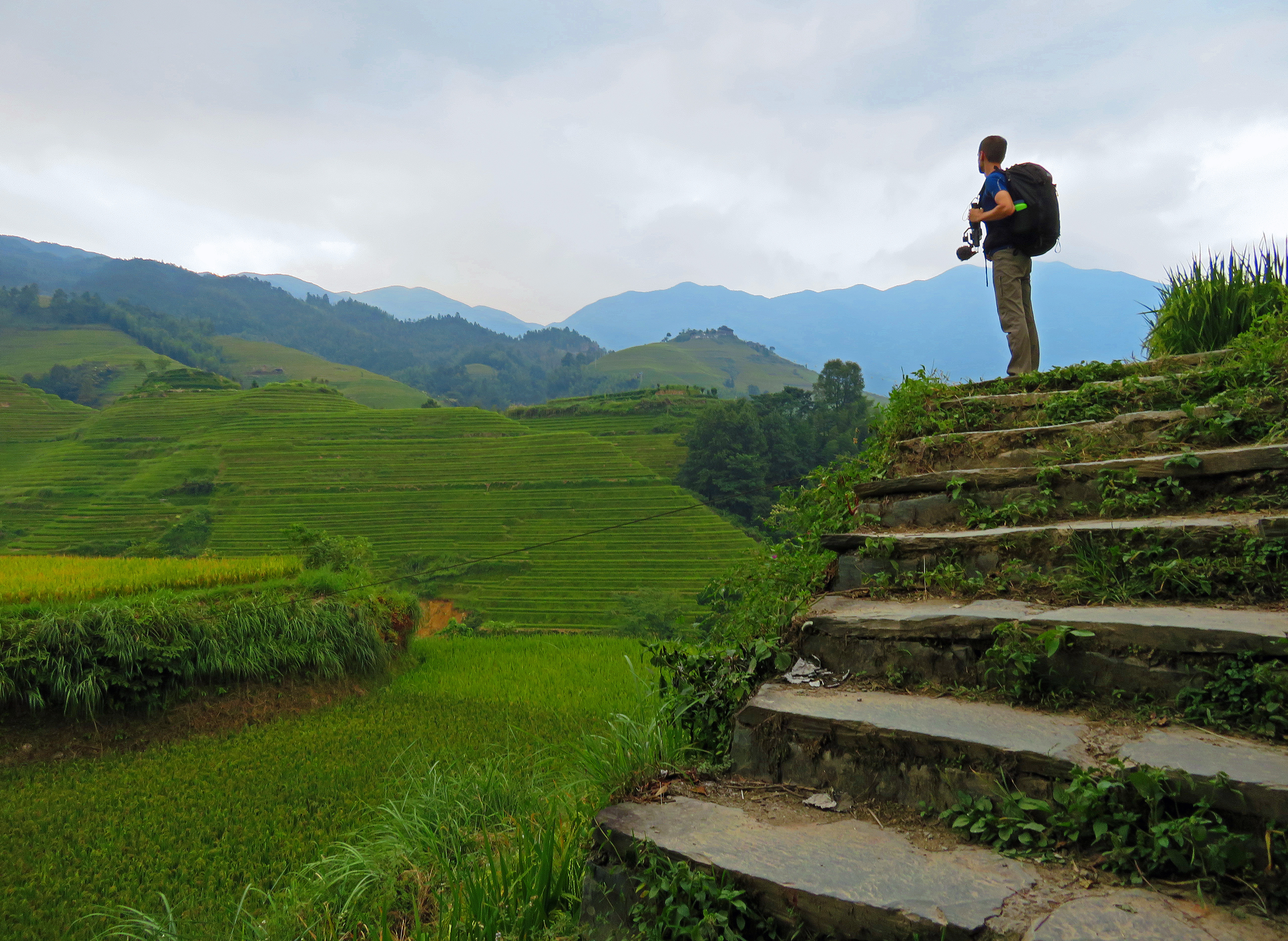
  • Longji Rice Terraces
  • Tian Tou Zhai Village
  • Yangshuo
  • Moon Hill
  • Fuli Town
  • Zhangjiajie National Park


Cormorants are heavier and more intelligent-seeming than you would expect, with neck feathers that are as soft as high-end cupcake
Typhoon Mangkhut shut down the train between Yangshuo and the coast and cut off the path to our flight out
Musings on a cultural difference between China and the US.
Today was tough. Shenzhen is louder, more confusing, and more difficult to navigate than Hong Kong, and my feet hurt
It involves a lot of pointing and uncertainty.

Gone Fishin’ … with Cormorants

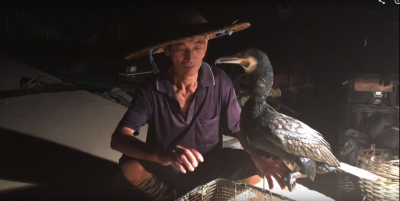
Cormorants are heavier and more intelligent-seeming than you would expect, with neck feathers that are as soft as high-end cupcake frosting. When they look at you, your first thought might be “bird, bird please don’t peck out my eyeballs.” But your second thought might be that you could see how humans formed a relationship with these magnificent creatures.

Fisherman in Yangshuo have had a long history of fishing with cormorants. They tie a snare around the bird’s necks and send them off in the water. Small fish will pass into the bird’s stomachs but larger fish get caught by the snare. As the birds return to the boat, the fisherman force the birds to regurgitate the larger fish into fishing baskets to collect their haul. It seems like it would hurt, with all the spikey fish spines, but the birds appear to take it in stride and keep returning to their master.

Cormorant fishing used to be a successful industry in China, Japan, and Korea, but now that way of life is dying and it is mostly a show that is done for tourists. In order to arrange ours, we were told to follow a woman who didn’t speak any English through a series of dark alleys, down to the river in the pitch dark of night, where we waited until the fisherman appeared. At the end of the show, we were able to hold the birds and view them up close. Animal rights concerns aside, it was an experience we feel lucky to have had.

I know the video is dark, but try to spot the cormorants diving for fish in the lighted water.

Outmaneuvering Typhoon Manghut & Travelling on the Fly

Journal entry from 9/8/18:

Typhoon Mangkhut shut down the train between Yangshuo and the coast and cut off the path to our flight out of HK. This forced us to rebook and extend our trip by 6 days.
The weather isn’t great, but we’re safe, and we’re going to make the best of this opportunity by traveling a bit further inland before heading home.

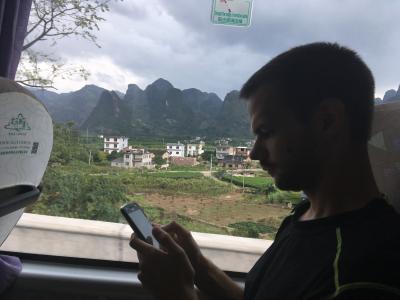
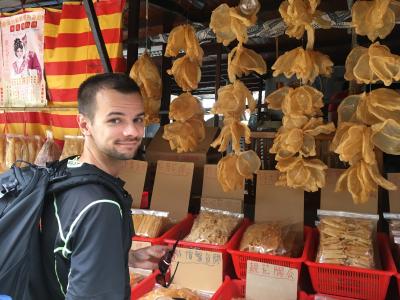
I’m happy to report that we’re really starting to figure out this bus-train-metro thing and it’s actually not so difficult once you get the hang of it. Here’s Josh, riding the bus to the Yangshuo metro station while booking two bullet trains to Guilin and Changsha. It’s great to be able to do these things on the fly and keep a flexible schedule so that we can adapt to the weather and travel conditions as we go.


Josh orders our connecting tickets on his phone. He became our travel ticket master during this trip.
Josh picks up the tickets he purchased by showing the reservation on his phone to the teller. It’s really not so complicated once you get used to the fact that you can’t speak the same language and you don’t try to rely on it.


On Vulnerability in China

On every bus and train stop, the announcements or signs remind you to “take care of the old and children”. I really like that.

Even the way that bus drivers drive very carefully when next to mopeds and scooters demonstrates how much this culture values human life and takes care of the vulnerable.

Sometimes, the vulnerable are silly white people who can’t read any signs and need help figuring out where to get hot water or queue for the bus and, in these situations, we’re taken care of, too.

I feel as safe here as I’ve felt anywhere.

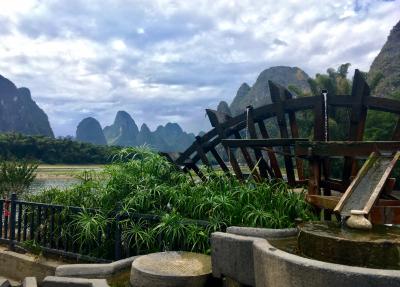
(Photo: XingPing water wheel on the Li River, Guangxi Province.)

Gratitude: The antidote for tough travel days

Today was tough. Shenzhen is louder, more confusing, and more difficult to navigate than Hong Kong, and my feet hurt as badly as I can ever remember them hurting, ever.
But I believe in finding things to be grateful for, always. So, here goes:

1. I am grateful that we are in a place that is more different than anywhere I can ever remember being, and that we can enjoy this amazing privilege of traveling and visiting Asia for the first time.

2. I am grateful that this hotel room is the same price as the one in HK but 6-7 times larger, and the nicest place I’ve ever paid for with my own money.

3. I’m grateful for translation apps, which helped us pay for our room and identify food today, the steripen, which allows us to drink clean water, and the VPN, which is giving me free range access to the internet.

4. I am grateful for fried pork (OMG GOOD), Hawthorne fruit gummies, “bean skin”? (Like an omelette with rice, mushroom, meat and beans?), and real passion fruit juice. I am grateful that the food here is fantastic, and I’m grateful that so much of it is not fish.

5. I’m grateful for my adventure partner, who makes even the long, hard travel days a lot funner.

Eating in a country where you don’t speak the language

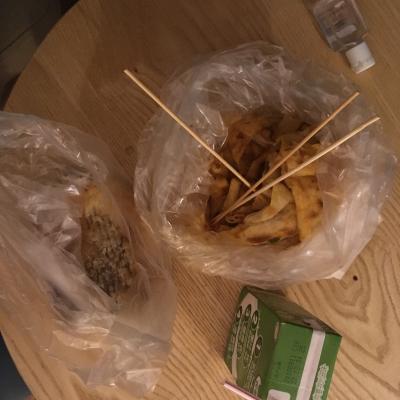
Eating in a country where you can’t read the menu or speak the language is fantastic. We’ve become comfortable with finding the best smelling thing, pointing at it, and saying “zhe ge” or “na ge” (this or that), and finishing the transaction with smiles, nodding, and gestures. Unfortunately, this means I can’t tell you what I’m eating.

This one is a glutinous dough, cooked on a griddle, maybe with cheese, onion, garlic, and chili, eaten on a stick.

We should really eat more things on sticks in the US.