Beautiful Bath, England

Nicole strolls toward the historic Bath Abbey.


Bath is a beautiful city. Its architecture and history asked for more time than the few hours we had to give, but we were glad to have the opportunity to walk centuries old stone streets, enjoy beautiful 18th century golden limestone architecture, and explore a 2000-year-old Roman bath house. Many of the streets are lined on either side with stone columns supporting long, golden apartment buildings a dozen feet overhead. This ever-present, smooth, honey-colored limestone came from local quarries and is only found here. The clean, geometric layout of roads and consistent styling of the buildings is beautiful by design, owing to city plans laid out as early as 1754. If you find yourself near Bath, it’s well worth whatever time you can spare.

Romans flocked to Bath after the discovery of a thermal hot spring below the town. They built a beautiful bath house, for which the town is named, complete with hot rooms, cold rooms, steam rooms, oiling rooms, and this large, heated swimming pool. In the time of the Romans, this would have been fully enclosed with a lofty ceiling above the second floor.


The water in the main pool is now tinted green with algae. Unfortunately, it is laced with heavy metals, teeming with bacteria, and is now unsafe to touch. This photo also shows how the baths have been reconstructed. The floors and bottom few feet of the columns are original while the lighter bits above were rebuilt in modern times.


Josh waits to order at a pastry shop just around the corner from the bathhouse.


The streets were absolutely beautiful. Some of the romantic imagery Jane Austen describes in her novels was inspired by her time living here.


Nicole drinks the (purified) “healing” waters. It tasted like metal.


How to build a clothing system for fast and light travel

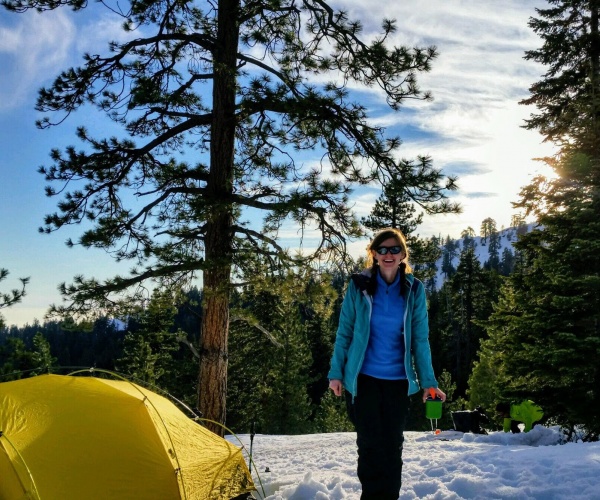
In addition to Sequoia National Park, (pictured), these clothes have been to Mexico City, London, Minnesota, Colorado, and Wyoming. With the right set of clothes, you can be prepared to go just about anywhere. Thanks to our friend Ming for the photo!


Our clothing system for fast and light travel was inspired by our clothing system for mountaineering. When designed correctly, it can be adjusted to cover any temperature range, from sub-zero to tropics, and any weather condition, including snow, rain, sun, etc. The one thing it doesn’t do is look particularly fashionable, fancy, or glamorous. That doesn’t bother us too much, as you probably will have noticed by now. The important thing is that it makes more adventuring possible.


We have a few ground rules:

  • Layer, layer, layer. The components of any system should be mix-and-matchable to accommodate all of the reasonably likely weather conditions above.
  • If you can’t wear everything in 2 days, you’re probably packing too much.
  • No cotton. Stick to synthetic blends that breathe well and dry quickly.
  • Just spend the cash on the good stuff. And by good stuff I mean technical, light, compressible, packable, quick drying clothing and fabrics. You’ll only need to buy 1-2 and they’ll last a long time.
  • Get yourself some Campsuds(Amazon) and a universal sink plug(Amazon).


Here’s how it works. On any given day, we wear an outfit. At night, we strip off anything that needs to be cleaned and wash it with Campsuds in the sink. (Campsuds(Amazon) is biodegradable and will clean clothes, dishes, face, body, hair, etc). Not all places you stay will have a convenient sink for this, so we bring a universal sink plug(Amazon) everywhere we go. In a pinch, a 1 gallon plastic bag, bucket, or any plastic container that holds water will work. Then you hang them out to dry. By the time you wake up the next morning, your clothes should be clean, dry, and ready to wear again. (IMPORTANT: This system will not work if you do not have quick-dry clothing. Make sure you get some intelligently designed fabrics and test this out at home before heading out into the world! Cheap, everyday clothing alternatives simply will not do the job in most cases and you will pay for your mistake. And if you do find yourself with wet clothing in the morning for some reason, the most efficient way to dry it is actually on your body. You’ll have to suck it up, put it on, and you’ll usually be dry and happy in under an hour.)

Examples of cold weather layers. From L>R: Base, mid, shell, insulating. This was the clothing I brought to sleep outside in subzero temps and ice climb in single digits. It will be overkill for most trips.

Layering system

  1. Undergarments- These should keep you clean and fresh and be easily washed.


  1. Base – This layer provides warmth, insulation, and next-to-skin comfort. They’re also great as pajamas. Items in this category can include:
  • 1-2 Quick dry tees, like these from Patagonia(Amazon). I like finding shirts that aren’t obviously athletic shirts so I can blend in in the city a bit better.
  • 1-2 long-sleeved base layers, like these(Amazon). You can’t go wrong with black. It can be dressed up or down, depending on the occasion, and look nice in a restaurant if necessary.
  • 1-2 synthetic base bottoms, like these(Amazon).


  1. Mid-layer- This is an insulating layer that should be relatively breatheable. It can include:


  1. Insulating layer- This may or may not be applicable, depending on the climate you are travelling to. Make sure these pack down small, preferably into their own pockets, otherwise the volume will overwhelm your 40 liters.
  • Down jacket (highly insulating, compressible, and fairly light. The higher the fill power (fp) is on the jacket, the more space- and weight- effective it will be. Also, the more expensive. Josh and I like Mammut and Marmot, and some of our friends have really liked Patagonia.)
  • Synthetic insulated jacket (e.g. Thermoball(Amazon) or similar)


  1. Shell layer- This layer protects you from external conditions such as wind, rain, snow, etc. You won’t use this all the time, so it is best if it is easily packable, preferably into its own pocket, and light. Skip heavy zippers, buttons, and fabrics.
  • ultralight rain/wind jacket like this(Amazon).
  • ultralight rain pants (optional)
  • hat for sun protection (preferably easily packable)
  • hat for warmth
  • gloves (synthetic base and/or waterproof shell, depending on your travel goals!)


  1. Footwear– Make sure you have spent significant time in your footwear, (including your socks!), close to home before putting it to work abroad. You want this part of your system to be broken in and especially well-tested.
  • 2 pair synthetic or wool (not cotton) socks (Try Darn Tough or Smartwool)
  • Shoes. We like approach shoes, which are made specifically for walking to rock climbs and have great rubber bottoms for off-road travel. Our favorites are the Scarpa Cruxes(Amazon) and 5.10 Guide Tennies(Amazon). You could go with any walking shoe with good support, depending on the needs of your trip.
  • Light flip flops (good for showering, swimming, etc.) This is one thing you don’t need to spend a lot of cash on, depending on your travel needs.


  1. Destination-specific clothes- this could include any number of items specific to your trip. For example:
  • Swimsuit for floating in the Dead Sea
  • Sarong for walking the beach in Panama
  • Dress for salsa dancing in Colombia
  • Sun shirt to protect yourself from sunburn in Cuba
  • Scarf to dress up your outfit in London or cover your head in Jerusalem
  • You get the idea


Once you’ve found a system that works for you, you will be amazed at how light your pack can be. The only consequence is that you will be wearing the same outfit in almost every photo. We find that it’s a small price to pay for being able to comfortably carry everything you need on your back in under 10 lbs and half-full 40 liters.

For trip-specific clothing lists, see our posts for Cuba(Amazon) and Panama(Amazon).

For a master packing list and how to use it, click here(Amazon).

This was my clothing for Panama. Temp range: 30-90 degrees F. Weather: Rain, wind, sun. Activities: Climbing, swimming, hiking. It packs down nicely, right?


Hampton Court Palace is a really spooky place

Rain seemed fitting for our visit to Hampton court palace: a dreary day for a dreary place. One of the halls echoes with the sound of a child whispering the fates of the wives of King Henry VIII; “Divorced, beheaded died; divorced, beheaded, survived”. Most everything about the castle was creepy, unwelcoming, and a little bit off.

Entering the palace the same way courtiers would when seeking an audience with the king, we found this waiting room. In the time of the king, there was no number to take and no line to stand in, just a room to stand and wait as long as it took. The king may not choose to conduct business for days at a time but his pages would sometimes emerge from their hidden corridors through a slit in the tapestries.

At least they would have this incredible ceiling to look at while they waited.

We next walked down a hall that didn’t photograph well, but had an interesting story. King Henry’s fifth wife, Catherine Howard, was beheaded at the Tower in 1542, aged 19, for adultery and treason. It is claimed that after she was arrested at Hampton Court, the terrified teenager broke free of her guards. She ran along what is now called the Haunted Gallery, screaming out to the King for mercy. She never reached Henry, but may have gotten about as far as this painting:

King Henry VII’s portrait of his family did not include his living wife, but rather his dead third wife, Jane Seymore, and his son Prince Edward. It also included two court “fools”, (not pictured), who were likely people with learning disabilities, and who were regarded as God’s special children and being closer to nature than other people.


In this painting, the four writers of the Gospels are crushing the Pope with rocks. Yes, really. Back story: In 1534 Henry VIII declared himself Supreme Head of the Church of England. He believed that he had direct and privileged access to God. The Pope was therefore unnecessary. Henry justified this through his reading of the Bible, as we can see in this brutal painting that Henry commissioned and owned.


As we proceed deeper into the castle, the rooms got progressively more exclusive. the private areas reserved for the royal family and their personal guests were ornately decorated. the corners were rounded out, providing a smooth surface for continuous murals to surround the room, like the photo below demonstrates.

Card and conversation room for hosting guests of the Royal family.


Mirror selfie in the throne room. So 16th century.


The most private room that we viewed was the Queen’s living quarters. It was dark, both in terms of light and decor. This was the place where the Queen could escape the expectations of her station and come to relax, even away from the watching eye of Henry VIII.

After spending time in the dark and spooky inner castle, we were happy to take a walk outside down the narrow alleys of the palace village before we caught our bus to Stonehenge!


How to eat cheaply in England

England is not a cheap vacation destination by any stretch of the imagination, (especially when compared to Cuba or Mexico City).

We did figure out one good trick to save money, however: hand pies. Hand pies are a cheap (<$2) alternative to sit-down food and can be carried with you as you move along the city quite easily. They can be filled with cheese, meat, vegetables, pesto… basically anything that can be folded into pastry. I can’t promise that they will be delicious, frankly. But they will sustain you for your London walking tour. You can find them in grocery stores, bakeries, and pastry and pie shops. The cheapest and tastiest we had actually came from the local grocery market, so don’t think that a fancy shop means a better pie.

Add in a water bottle, good camera, and tripod and you’re ready to hit Parliament Street!

Josh waits patiently for our hand pies to be heated in Bath, England.


Other cheap food options include:

  • Pizza (make sure to order cheese on your pizza, otherwise you might accidentally end up with marinara bread like we did), and
  • Cooking breakfast in your Airbnb kitchen. We had English breakfast tea, toast, and eggs every day thanks to our gracious Airbnb host*.

(*For more info on how to use Airbnb to live with a local in another country, and a $40 off coupon, click here.)

London Walking Tour – Part III

The third and final portion of our London Walking Tour took us from the Tower Hill tube stop past a remnant of the London Wall, The London Tower, Tower Bridge, London Bridge, and All Hallows By The Tower, arguably the oldest church in London.

Stop 13: London Wall

This is one of the most impressive surviving sections of London’s former city wall. The lower part was built by the Romans around 200AD. It’s purpose may have been as much to control the passage of goods and people as for defense. During the medieval period, the wall was repaired and heightened. From the 17th century it fell into disuse and parts were demolished. Several sections, including this one, were preserved by being incorporated into later buildings.


Statue believed to be of the Roman emperor Trajan, AD 98-117.


Stop 14: The Tower of London

Stop 15: Tower Bridge

The Tower Bridge, completed in 1894, is a London icon.


Stop 16: London Bridge

London Bridge is… just a bridge. And it appears to be quite sturdy. (It’s shown in the background of this photo). Still, we felt a need to see the thing we all sang about as children.


Stop 17: All Hallows At the Tower

All Hallows at the Tower is arguably the oldest church in London. Part of the structure dates back to the time of the Saxons in 675 AD, and the crypt contains a Roman tessellated floor dating from the 2nd century. It was extensively damaged during the blitz in WWII and later rebuilt.


The crypt and chapel below is rather spooky.


The crypt below houses the remains of people who were involved in the church, including Tubby Clayton and Sir Thomas Moore. The altar is interesting from a Knights of the Templar holdout in Palestine, dating back to the times of the crusades. It was gifted to the church in 1945 by Miss Frances E. Newton, a “formidable, pipe-smoking missionary working in Palestine supporting Arab causes since 1889”.


This one threw us for a loop. This was once the crow’s nest used by Shackleton on his last Antarctic expedition in the good ship “Quest”. It was set out during church fundraisers to be filled with donations. It’s presence in the church doesn’t make much sense and how it got there is apparently a bit of a mystery.

The British Museum

Our Airbnb host Errol, on the British Museum:

“They’ll ask for a donation but I don’t give them a thing. It’s just a bunch of stuff that’s been nicked from other countries.”

It’s true. British archaeologists have scoured the globe and brought back roughly 8 million beautiful and important artifacts from civilizations worldwide. Is it ethical? We think it depends. On one hand, it seems a shame to rob countries of their history. On the other hand, we’ve seen museums in developing or unstable countries (e.g. Egypt and Cuba) store uncurated collections of important artifacts in non-climate-controlled rooms, direct sunlight, or even outdoors. In that case, the British Museum’s impeccable preservation and curation doesn’t sound so bad.

We were unable to see all of the museum in an afternoon, as you can imagine, but we did make a point to hit the museum Director’s top highlights, including the Rosetta Stone.


The interior of the museum.


The Rosetta Stone was discovered in mid-July 1799 by soldiers in Napoleon’s invading army at the town of Rashid (Rosetta), and later surrendered to the British as part of the Treaty of Alexandria in 1801. Copies of it were circulated internationally and within 25 years, the hieroglyphic script was deciphered. I had been dreaming of seeing this stone since the 6th grade.


The Royal Game of Ur, 2600-2300 BC, modern day Iraq. At least six graves in the Royal Cemetery contained a wooden game board inlaid with shell, red limestone and lapis lazuli for the game now known as the Royal Game of Ur. This is an early example of a game that was played all over the ancient Near East for about 3000 years. (Museum description).


Pair of gold armlets, 5th-4th century BC, Oxus Treasure. These objects are among the most important surviving items of ancient Persian craftsmanship. It is likely that they were intended for display rather than being worn. The lion-griffin terminals were originally inlaid with precious stones, which were later removed. This inlay is typical of high-quality jewllery from this period. Similar armlets are shown on the sculptures at Persepolis, presented as royal gifts by the Lydian delegation. (Museum description).


Palace of Sargon. These are sculptures from the city and palace of Korsabad, built for the Assyrian king Sargon II (721-705 BC). The pair of human-headed winged bulls stood originally at one of the gates of the citadel, as magic guardians against misfortune. (Museum description).


Basalt statue known as Hoa Hakananai’a (Probably ‘Stolen or hidden friend’), Easter Island, Chile, 1000-1200 AD. This Statue, representing an ancestral figure, was possibly first displayed in the open air. It was later moved into a stone house at Orongo, the center of a birdman cult. Low-relief designs carved on the back are associated with this cult. The statue seems to have been used in both context to express ideas about leadership and authority.


The Holy Thorn Reliquary. Enamelled gold, sapphires, rubies, and pearls. Paris, ~1400. This reliquary was made to contain a thorn, supposedly from the Crown of Thorns that was placed on Christ’s head before the Crucifixion. The armorial enamelled plaques in the base show that it was made for Jean. duc de Berry (1340-1416. The Crown of Thorns itself was a French royal relic, housed in its own chapel in Paris. Individual thorns were detached to make precious reliquary jewels.


The British Museum houses a collection of statues taken from the Parthenon in Athens, which was built 2,500 years ago as a temple dedicated to the Greek goddess Athena. There is a bit of controversy surrounding these statues. Mainly, Greece would like them back. The heads of many statues live in Athens, while the bodies are in London, and it does seem a shame that they can’t work together to unite them once again.


The Nereid Monument. Built by Lykians, a civilization living in modern-day Turkey which was eventually assimilated into Persian and then the Athenian empire. This is the finest and largest example of a Lykian tomb found at Xanthos, southwest Turkey. It is named after the figures of Nereids, daughters of the sea-god Nereus, placed between the columns. It reflects both Greek and Persian influences on Lykian culture. The high podium burial style was Persian, while the architecture is clearly Greek.