Israel and Palestine were complex places with a lot to unpack. We’ve only begun to do so here!
In the meantime, here is a map of the places we visited. If you are considering visiting any of these and have questions, feel free to message us!
Travel far, and keep your job.
Israel and Palestine were complex places with a lot to unpack. We’ve only begun to do so here!
In the meantime, here is a map of the places we visited. If you are considering visiting any of these and have questions, feel free to message us!
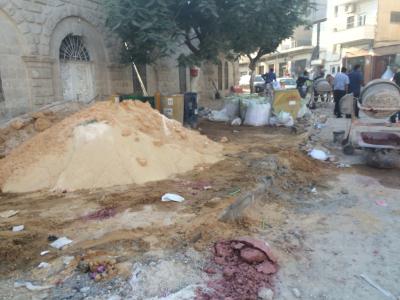
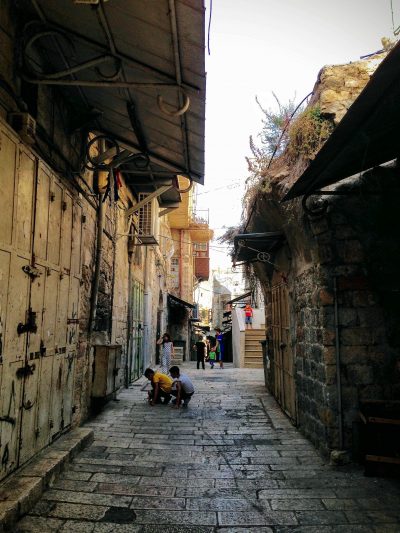
People actually live in the old city of Jerusalem, surrounded by temples and churches and mosques and touristy bazaars. Later in the afternoon we would witness children of about this age breaking pots and tiles and throwing the shards at each other… The police were even called in to break it up.
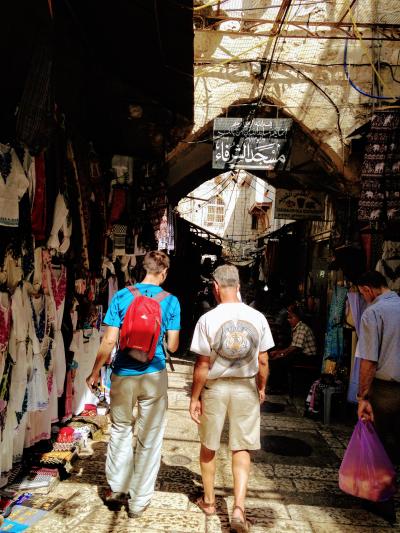
Old Jerusalem is an ancient, fragrant, complex, dusty, emotionally-, politically-, and religiously-charged space, and the best way I can describe it is to say: It feels heavy. As you walk through it and hear the call to prayer or the church bells or guttural Hebrew, it’s almost like 2,000 years of weighty history coming crashing in all at once.
We loved it. But it was difficult. And without our friend Ronen there to decode the goings on, we might have been pretty lost. We didn’t blog then but I’ll attempt to capture some of the things we learned in the following pictures and captions the best I can.

And this is what it sometimes sounds like:
Another amazing thing about Old Jerusalem is that people actually live here, crammed in between these overwhelmingly significant structures, going about their daily business, and kids here have their scuffles here just like anywhere else in the world. In this photo, two boys are picking up pottery shards from pots they had smashed with the intention of chucking them at another group of children. The other group of children was retaliating with broken bits of tile. Mothers came out and scolded, as mothers do, and eventually the police stopped by to break it up. This event was significant enough for us that we scooped up a bit of tile as a keepsake and still have a piece of it glued on a magnet on our fridge.


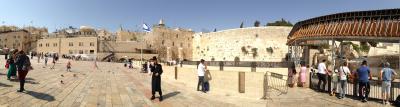
After seeing this so many times on TV, I have to say: it’s smaller than you’d think.

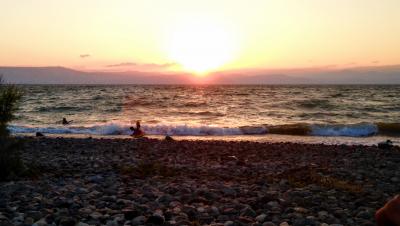
Watching the sunset and sleeping out next to the Sea of Galilee (Kinneret) is one of my most cherished memories of Israel. We picnicked at night and bathed in the Sea in the morning, and I received a marriage proposition from a stranger along with a really strong cup of Turkish coffee. This place reminded me of the lakes and campgrounds my family would visit growing up. Even though it had a different texture, flavor, and language, the underlying core of it was comfortingly familiar.


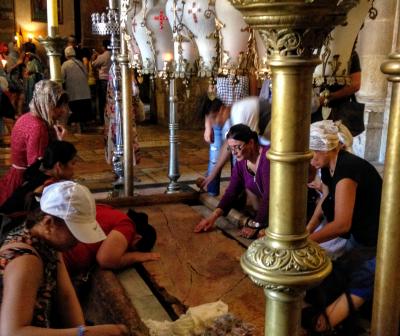
We walked out of the hot, bright Israeli sun and were immediately surrounded by darkness, cool stone corridors, clouds of incense and candle smoke, richly colored paintings, haunting music, and hordes of crying pilgrims. There is something about this place that makes it one of the more emotionally charged places I’ve ever been.
As I entered the tomb where Christians believe Jesus’ physical body was laid to rest, I even found myself wiping away some tears. As a long time atheist, this makes no sense. I cannot explain why an emotionally saturated atmosphere would have caused a semi-religious experience in an absolutely not religious person. But I think it’s okay that there are still some things in this world that I don’t understand.
Here are a few photos from in and around the Church, for those who are interested. I feel privileged to have gotten to visit this important place.

We stuck out like a sore thumb. I, for one, was nervous. Our comfortable rental car was parked in a gas station parking lot many miles away and we had negotiated our way into the heart of Palestine by taxi using sign language, nods, smiles, cash, and the help of an occasional translator. We were aware we were getting ripped off and understood that this was the price of visiting a place without knowing any of the language or much of the culture, on our own. We hadn’t seen anyone who looked like us since we left westernized Israel.
Our first stop was the Mount of Temptation, where a very well-dressed man followed us around the site, lurking nearby. We debated: was he there to give us a hard time, or to make sure we were okay? Either way, we tried to stick ourselves in packs of middle eastern and Indian tourists, preferably near mothers and grandmothers. The site itself is interesting and said to be the location that the devil tempted Jesus in the desert. Given that it was 9am and already 100 degrees, I could imagine that spending any amount of time here was a bit of a trial. We snapped some photos and snuck away from the well-dressed man, unsure if we should be mentally thanking him or relieved to get away.


Back at the base of the mountain, we approached the ancient Tell es-Sultan. Tells are fascinating. They’re hills that are literally made out of the rubble of thousands of years of cities, built and collapsed and re-built over time. They are an archaeological goldmine and this particular one is one of the oldest known settlements in the world. It dates back to 10,000 BCE. Remember those Canaanites, Phoenicians, and Philistines from the bible? They lived here. Remember that story about Joshua fighting the battle of Jericho, marching in circles and playing trumpets and the walls came a-tumbling down? Whether or not the story happened exactly like that, these are those walls. It. is. magnificent.

It was also scorching hot. By this time, the thermometer was nearing 120 degrees Fahrenheit. I was a bit dizzy and very dehydrated; we had to keep moving. We panted our way to a roadside juice stand with fresh squeezed juice that we really hoped was sufficiently safely prepared and stored for our weak American stomachs. Happily, we met a Palestinian boy there who spoke decent English and scooped us out some. It was sweet, and fresh, and refreshing. We didn’t talk about anything particularly important but this chance meeting would have a lasting impact on us: anytime Josh or I hear about a Palestinian young man who was killed in the news, this boy flashes in our mind, and we hope it wasn’t him. I know this is morbid but this is one of the hazards of traveling, right? It puts a face on the conflict in far flung lands and makes every sad NPR article a bit more painfully real.
This boy was just one of the kind-hearted people we met while wandering around the city of Jericho. The atmosphere in the town of 18,000 was a mix of hope and desperation. Tourists haven’t been coming here much in recent times because they are afraid of unrest and conflict, cutting off the economic inflow. Possibly because of this, the Palestinians were extremely happy to see us and every person who we passed took time to say “Welcome to Jericho!”. The vast majority didn’t appear to speak a single other word in English, but they had all memorized that phrase and we heard it over and over throughout the day with smiles, waves, and gifts of crunchy dates pressed into our hands. Sometimes the desperation peeked through, like a man who started haggling a simple salad at 15 US dollars when we could get large sandwiches for a dollar or less 5 feet away. The poverty in many places was apparent. Still, there was an undercurrent of hope. There were election posters hung about, including the faces of some female candidates, and piles of construction materials on the street corners. Men placed bricks and stones happily, seemingly optimistic about the future of their town.


Eventually, it started to get late, and we were hot and dusty and parched. We needed to arrange to meet our taxi driver and make our way back to Jerusalem. As we drove west, it was a bit like driving forward through time. From stone ruins and dirt roads, past whitewashed mosques, simple dwellings, a gas station and small settlements, right up to the modern skyscraper construction of Tel Aviv. I would go back in time to Palestine in a heartbeat.
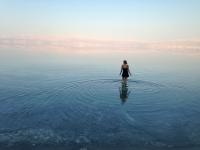
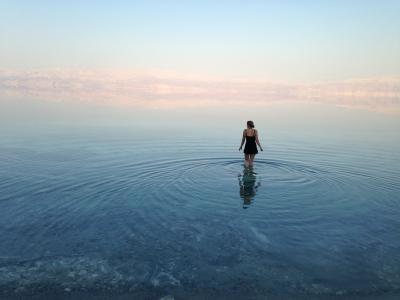
The Dead Sea is simultaneously harsh, desolate, and devastatingly beautiful. It is the lowest elevation spot on Earth. Touching the water, it almost feels slick or oily from the dissolved salts, and that density makes for amazing floating. I hope you can enjoy it vicariously through this video of Josh’s first float.
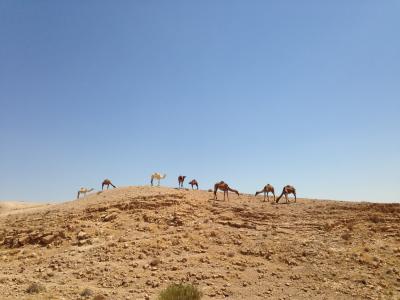
One of the craziest things about Israel is recognizing names and places from the bible ALL THE TIME. These were just a few. You can take the literal-ness of these sites with all of the grains of salt in the Dead Sea, to taste.
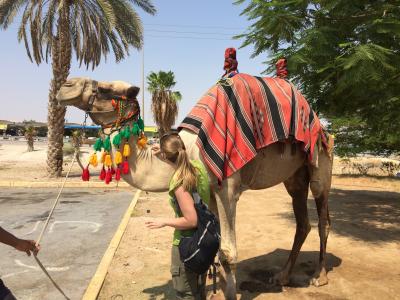


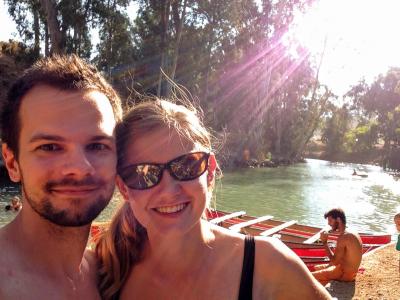
Most of the time, Josh and I focus on being travelers, not tourists. That being said, sometimes you just need to float in the dead sea, or take a selfie, or RIDE THE FRIGGEN CAMEL. Because you’re in the Middle East and you stick out like a bright white sore thumb anyway, you might as well: Just do it! Forget the traveler pride and do the touristy thing.